











The Origin Story
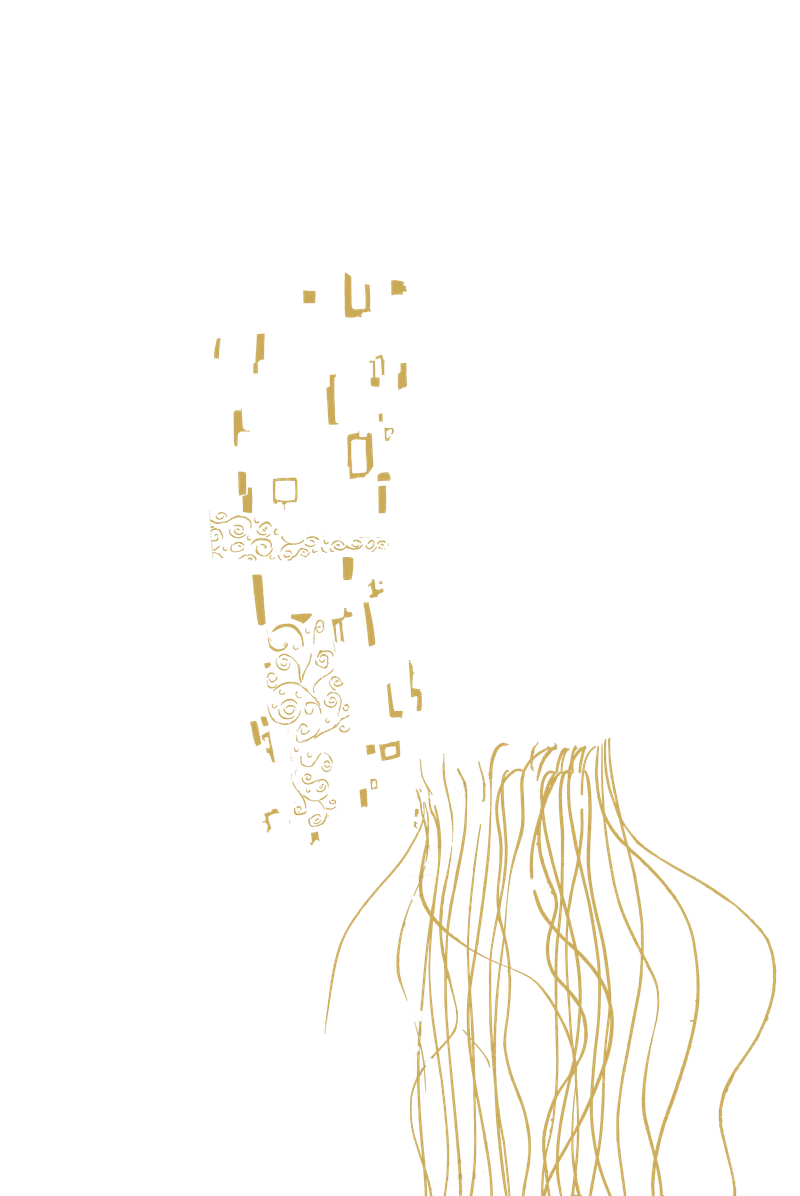
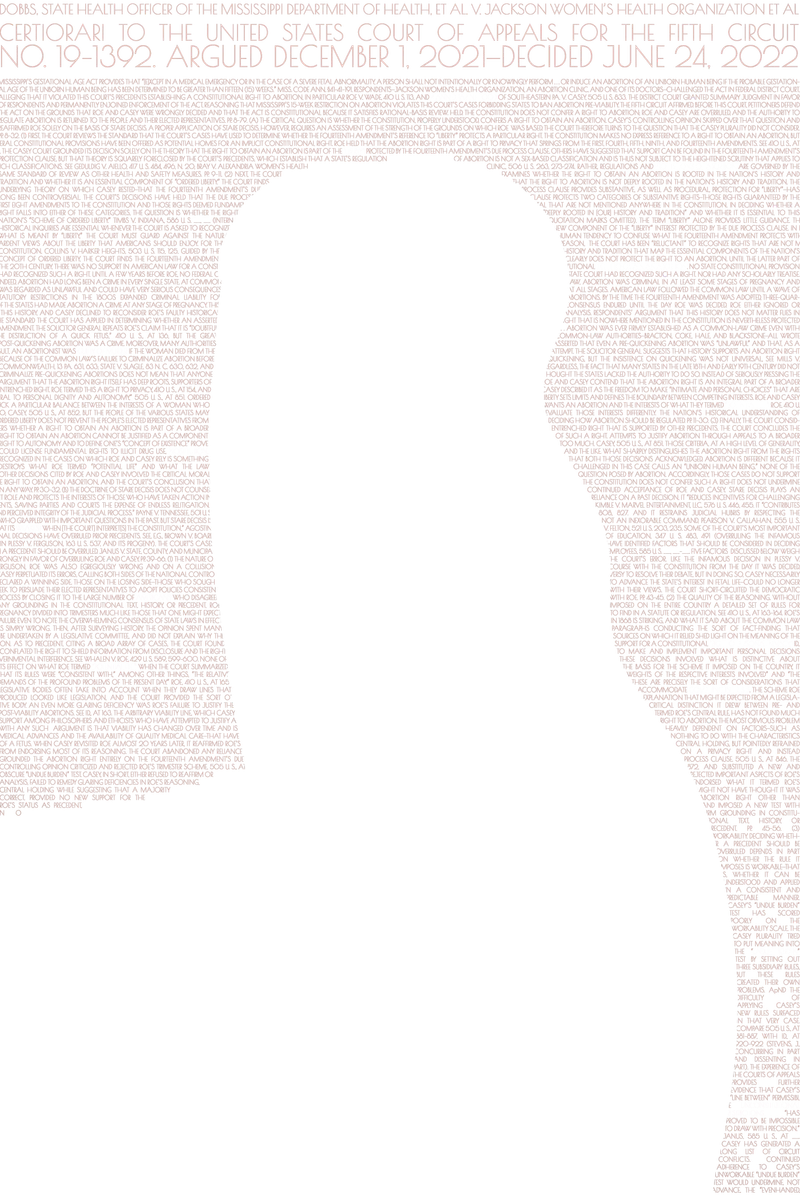
"The Kiss" started life as a simple four-color print, designed by artist Meg Kirkpatrick. It's a protest piece, recontextualizing Gustav Klimt's iconic 1918 painting to reflect the power dynamic in a post-Dobbs America. The background text contains the complete legal ruling overturning Roe v. Wade.
The team at Indigo Ink loved the concept and wondered: could that background text be converted to foil? Meg provided a new file to test the idea. It worked. And then came what might charitably be called a "terrible idea"—the original Klimt painting includes gold, silver, and platinum leaf. What if the print could too?
That question kicked off six months of file preparation, experimentation, and what would become one of the most ambitious foil builds ever attempted. The result won a FSEA Gold Leaf AwardGold Leaf Award from the Foil and Special Effects Association in 2024.
Understanding Layer Order
It turns out the order in which foil is applied matters enormously. Some foil colors stick to others, some stick to everything, and still others stick only to the ink beneath them. The foil needed to be laid down in a very specific sequence.
The gold and silver foil are directly printable—they can be applied to paper that's been through the press. But adding a third foil color in the background required a layer of Sapphire Coating, a UV-cured primer that improves ink adhesion. Without it, the foil simply won't transfer.
A critical rule emerged: matte foils must precede metallic foils in the stacking order. Breaking this rule creates adhesion failures and registration nightmares—as the production process would painfully demonstrate.
The UV Reactive Addition
Right around the time file prep was wrapping up, HP debuted a new yellow UV reactive ink. The moment Indigo Ink got their hands on it, they reached out to Meg. In for a penny, in for a pound of plutonium.
It's always nice to find a collaborator operating on the same wavelength of creative ambition. A few days later, Meg delivered an entirely new layer of artwork that re-recontextualized the entire print under blacklight. What appears as a romantic embrace in normal light reveals a different story when UV illumination exposes the hidden imagery.
The Production Process
Production split into three phases: substrate preparation, printing, and foiling.
Substrate Prep
Tango 18pt C2S was selected as the base stock—an extremely stable material needed to survive the many passes through various machines.
Printing
The first passes were straightforward: black on the back of the sheet, then gold, silver, and rose gold foil on the front. These can be stacked without trouble since the first two foils are directly printable. The third required the sheets to pass through the UV coater for Sapphire Coating application.
Foiling
Then the hard part started. Seven layers of foil needed to be applied on top of the laminate, each requiring perfect alignment with the layers below.
Lessons Learned
"The Kiss" was never intended to be a production-ready job. Think of it as the printing equivalent of a concept car. The goal was to discover how far sleeking foil could be pushed, to find the practical limits, and to understand where the process starts breaking down.
But the project yielded enormous insights into temperature control, paper behavior, and layering techniques. It sparked conversations with other printers and artists, led to some remarkable follow-up projects, and earned industry recognition. Sometimes the value of pushing boundaries isn't in the destination—it's in what you learn along the way.
Layer Breakdown
Digital Sleeking Foil Colors
This piece showcases 10 of our 12 available digital sleeking foil colors. Click any swatch to see a detailed sample.